
Catholic Social Teaching 101

Pre-Election Thoughtfulness
Fr. Frederick Edlefsen
In Catholic Social Teaching (CST), a healthy society promotes the Common Good: “the sum total of social conditions which allow people, either as groups or as individuals, to reach their fulfillment more fully and more easily” (Compendium of the Social Doctrine of the Church, #164). This principle is rooted in something more basic: the dignity and right-to-life of the human person. From the moment of conception, the human person is a “body and soul” gifted with potential and a transcendent destiny.
The Common Good is based on the Natural Law: humanity’s participation in God’s Providence. Because humans are intelligent and free, they participate in the God’s governance of the world. Through the Natural Law, humans are called to create a new “ecology” that cultivates human potential. Individuals and group collaborate, putting Creation at everyone’s service.
Hence another principle: The Universal Destination of Goods. “God destined the earth and all it contains for all people so that all created things would be shared fairly by all mankind under the guidance of justice tempered by charity” (Compendium, #171). For example, the “right to private property” is a public good insofar as it promotes the Universal Destination of Goods and the Common Good.
This implies Subsidiarity (Compendium, #185): a group and institution of a higher level (e.g. a national government) must help, support, and promote groups and institutions of a lower level (e.g. local governments, businesses, institutions, families, etc.) without imposing or taking over. All institutions serve society’s most basic cell: a married man and woman and their children. Large groups should not dominate smaller or local groups — families, communities, local businesses. Subsidiarity makes room for Participation (Compendium, #189). Everyone has a right to freely contribute and prosper from their contribution.
“Subsidiarity” doesn’t mean narrow or exclusive localism. Hence, the Principle of Solidarity (Compendium, #192): There are universal and inclusive rights for all because every person is an interdependent and social being, with a right to community with everyone else. Institutions with broad power (national governments, big businesses, unions, wealthy people, etc.) must ensure that the “rules” of social involvement and economics are fair and inclusive. Federal civil rights laws protecting minorities are an example. Solidarity creates a “preferential option for the poor.” In brief, CST seeks economic, social, and political democracy for all “people of goodwill.”
Categories:
More Stories
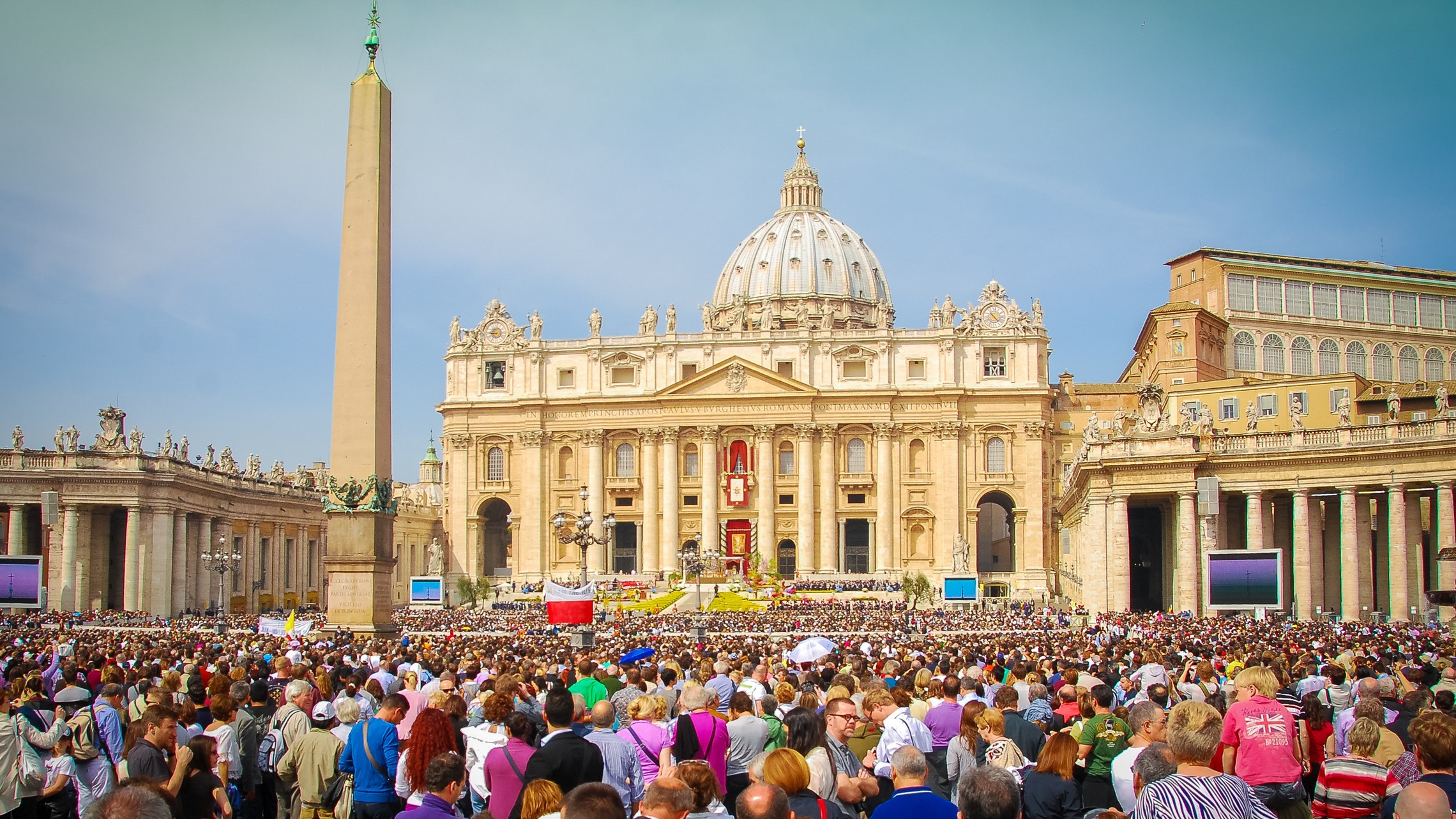
Sixty Years Ago: A Milestone of Dialogue for Humanity
Nostra Aetate: The Declaration on the Relation of the Church with Non-Christian Religions
October 28, 2025
A Milestone of Dialogue: Sixty Years of 'Nostra aetate' Signed on 28 October 1965 by Pope St Paul VI, the conciliar declaration...Read more
Saints, Souls, & the Last Things
October 27, 2025
By Father Fred Edlefsen
In November, the Church honors those who endured time’s “great trial” (Revelation 7:14). “Therefore, if...Read more
A Tale of Two Prayers
October 21, 2025
By Father Fred Edlefsen
A dog barks up the wrong tree. Apply this to the spiritual life. For example,...Read more