
THE MANHOOD OF ROBBIE BINTER

A Short Story by Fr. Frederick Edlefsen
The Manhood of Robbie Binter
A short story by Fr. Frederick Edlefsen
Matthias Robert Binter, known as Robbie, turned fourteen on May 1, 1968. That day, after Fr. D’Amour’s morning Mass at St. Luke’s, Robbie’s little sister Julie crowned the Virgin Mary statue with flowers.
The oldest of six, Robbie was a modest country boy. His dad, Karl Binter III, hailed from a line of pious but simple farmhands. He drove a 1942 Ford pickup, inherited from his father. By his own skill and hands, he kept the engine like new because he hadn’t the money for a new truck. Karl married Elsa Mittenbrenner, a local farmer’s daughter, in 1953.
That year, they bought a farmstead and house along Lake Iroquois Road, or County Road 778. After the War, the previous owners plumbed the property with running water and put it on the grid. Before Robbie was born, Mr. Binter bought a green 1954 Rambler stationwagon for Elsa. When Robbie was two, the Binters purchased a small RCA television. By 1958, they equipped the kitchen with a GE fridge and oven range. The two storied house had a square floor space, about 30’ X 30’, with three small upstairs bedrooms, two baths, and a basement. It was sided with tan shingles, some falling off, and shudderless windows. There was a front porch and a small octagonal window beneath the gently sloping roof awnings. They had chickens out back. From dawn to dusk in summers, and sometimes after school during fall harvests, Robbie did farm work with his dad. He was honest and plainspoken, a self-assured but sensitive soul.
In the mid-60s, Mr. Binter left farm work for better paying construction jobs in the nearby Township of Lake Iroquois. Beautifully situated on hill-studded Lake Iroquois, for which the Township was named when the lake was dammed in 1923, it was once a vacation spot for wealthy city folks. The Township boomed after the feds built a four-lane three miles to the south in the mid 1950s. Executives and airline pilots moved in and built ultra-modern homes, some in Frank Lloyd Wright style, with picture windows overlooking the Lake. By the mid 1960s, small stripmalls lined the Lake Iroquois Road, starting about a mile from the Binter house. In 1958, the Catholic diocese built St. Francis High School, well reputed and run by the Brothers of St. Francis.
Elsa wanted Robbie to go there, as most St. Francis grads went to college. So, she got a job managing a deli at the local A&P to earn his tuition money. While Elsa worked, her mother watched the young children at home.
That August, after Robbie’s fourteenth birthday, Elsa drove Robbie to St. Francis for the first time on her way to work. Robbie never forgot that nervous ride, as he didn’t know a soul at St. Francis or what a “Brother” was. The Seekers were singing “I’ll Never Find Another You” on the Rambler’s AM radio as they approached the school: “There’s a new world somewhere / They call the promised land / And I’ll be there someday / If you could hold my hand….”
Elsa wept as she confided her hopes to Robbie. “I caint do this for all a’ ya. I’m sendin’ you to Saint Francis not just for you but for lil’ Johnny. You gonna’ support that boy someday. What if somethin’ happen to me or daddy? Study for him, not just for you.” Tears flowed as she kissed Robbie before he stepped from the car.
That departure was as uncertain for Elsa as it was for Robbie. It was a painful act of hope. A plunge into Providence. Johnny was her youngest, a three-year-old deaf boy with muscular dystrophy. “It's a long, long journey / So stay by my side / When I walk through the storm / You'll be my guide, be my guide….” When Robbie stepped from the weathered green station wagon, he entered a new world and a long, long journey.
He faltered on his first day at St. Francis. Back home, there was no concept of first impressions or appearances. His long and disheveled blond hair flowed over his ears, waving down his neck to his to his shoulders. It was a bit greasy, as he shampooed twice a week. Robbie’s country grammar and the peach fuzz on his upper lip set him apart from his professionally polished classmates. He didn’t brush his teeth that morning – Elsa rarely pushed that point – so his morning breath suggested pancake syrup and cigarettes.
He smoked his mon's Pall Malls. She didn’t object. Though healthy and tall – he was pushing 5’ 11” – he played no sports. He hadn't the time, save for middle school PE. He didn't watch TV, given the fuzzy black-and-white mosaic images on their RCA in the cramped noisy house. He played the banjo well, but that didn't interest the Lake Iroquois crowd.
Robbie wasn’t self-conscious. He had little awareness of anything that wasn’t obvious. He only saw outside of himself. He had an eye for the St. Francis girls but was unaware that, among themselves, they often gossiped meanly about him. Secretly, a few loved him. But they’d never admit it. He had no pretentions, nor put-ons, nor need to impress. It was a grace. Robbie was as innocent as any son of Adam. He felt misplaced and lonely at St. Francis. But he wasn’t bitter. He’d make a go of it because mom worked hard to put him through, for Johnny.
Robbie made one friend at St. Francis that fall, Stan Willoughberry. Stan was an only child, raised by a Welsh nanny. Unlike Robbie, he was insecure but well groomed. His father flew 707s for TWA. His mother was a stewardess. They lived in a Bauhaus home with picture-windowed walls, extending from an embankment and overlooking Lake Iroquois. It was supported by pilings decorated as totem poles. A 25’ mahogany Chris-Craft was docked in the lake beneath the house.
When Stan spent a weekend at Robbie’s house, he was unprepared for the experience. Robbie sensed the unintential and inculpable disdain of Stan, who seemed loath to touch or eat anything in the Binter home. For the first, Robbie felt rejection. From then on, he feared taking anyone from St. Francis to his home.
One lunch period, Robbie was spontaneously moved to sit with Wendy Renner, whom he’d never met before. She was a pretty and brown-eyed sophomore, wearing a yellow dandelion in her long sheening hazel hair, an iconic flower child. Her looks made Robbie happy. When he sat at her table, Wendy and her two friends froze up and went silent. After an awkward and speechless lunch – he didn’t leave until he was done eating – Robbie held back his tears and went on. He recalled his mom’s words.
After school, Robbie would sit alone on a bench under a tree near the edge of the school’s property, doing homework until mom picked him up after work. One afternoon, from a distance, he saw some recent St. Francis grads holding anti-war signs and burning draft cards on the sidewalk in front of the school. The TV news was there. the prospect of going to Vietnam was too remote for Robbie.
It was a cold and overcast February morning. A police officer met with Brother Bernadine, the Principal of St. Francis. The officer reported that Robbie’s mother collapsed at the A&P. She was dead when the ambulance arrived. Supposedly an aneurism. Robbie was pulled from class.
Robbie was pulled down, beneath a chaotic sea, by an undertow and not knowing where he’d come out. The next few days were a surreal and grievous blur. He surfaced from the current into the front pew of St. Luke’s, with Fr. D’Amour saying his mom’s Mass of Christian Burial. His red eyes locked on the Paschal candle flickering over the casket. His arms wrapped tightly around little Johnny and Julie. The Franciscan Brothers were there. Stan was present, the last time he paid Robbie any attention.
After dark that evening, Robbie drove the Rambler to St. Luke’s. The church was open. He collapsed his body into the front pew, drooping his head between his legs. Tears wet the floor.
Father D’Amour came in to lock up. He heard sobbing. Robbie was a mess. Bloodshot eyes spoke of speechless grief. Father D’Amour sat with him. After a silent minute, save for the quivers of weeping, Father D’Amour said, “Bless you, my boy. Stay as long as you want.” He left Robbie in the pew, turned out the lights, and locked up.
Robbie felt a vertigo. Fear, as if he were standing on a cliff's edge called The Future. He lifted his head and raised his eyes to the sanctuary lamp’s candlelight dancing on Jesus’ crucified face. He stared thoughtlessly. He lit a Pall Mall. Smoke rose into the shadows. Lost in inarticulate grief – and an adolescent haze – Robbie stood before Tomorrow’s frightful gaze.
But he didn’t know that, before Sunrise, something would happen. It would set him farther apart from his St. Francis peers. But, for now, he wept loudly and deeply. He looked at Christ-crucified and yelled, “Mom! Where are ya’!?” Breaking down uncontrollably, with forceful but faltering words he cried again, “What ya’ want me ta’ do!?” Silence. Troubling questions came to mind.
Could he go back to St. Francis without mom’s money? If he could, would he find a friend there? Could he carry on with the pain? Would he have to quit school for work? Do construction like dad? Who’ll take care of lil’ Johnny? Would he be drafted to Vietnam? Die there? No answers. He lit another cigarette and fell asleep on the pew.
Cigarette smoke still lingered when Fr. D’Amour unlocked the church at 5:30AM. Robbie was asleep. “I told your father you were here.” Robbie woke, reluctantly. “Come, my boy. I’ll show you something.”
Robbie groggily took Father’s hand and was led to Mary’s statue. Her eyes glanced and gleamed tenderly in the candlelight. She looked at him, like he mattered. “Kneel here,” said Father. He took a wooden taper from a little sandbox on the wall, lit it from another candle and gave it to Robbie. He lit a candle. Robbie was left there, kneeling before his Mother. Father’s footsteps faded into the distance.
Categories:
More Stories

THE MISADVENTURES OF LARRY GOODWIN
Believing in the Eucharist before believing in God
May 4, 2025
The Misadventures of Larry Goodwin How he believed in Transubstantiation before he believed in God Fr. Frederick Edlefsen
Larry Goodwin graduated...Read more

A GOOD WORD FOR 2025 GRADUATES
What's Your Calling?
May 3, 2025
What’s a Good Life? A Good Word for 2025 Graduates Fr. Frederick Edlefsen How do you want to live? Do you want...Read more
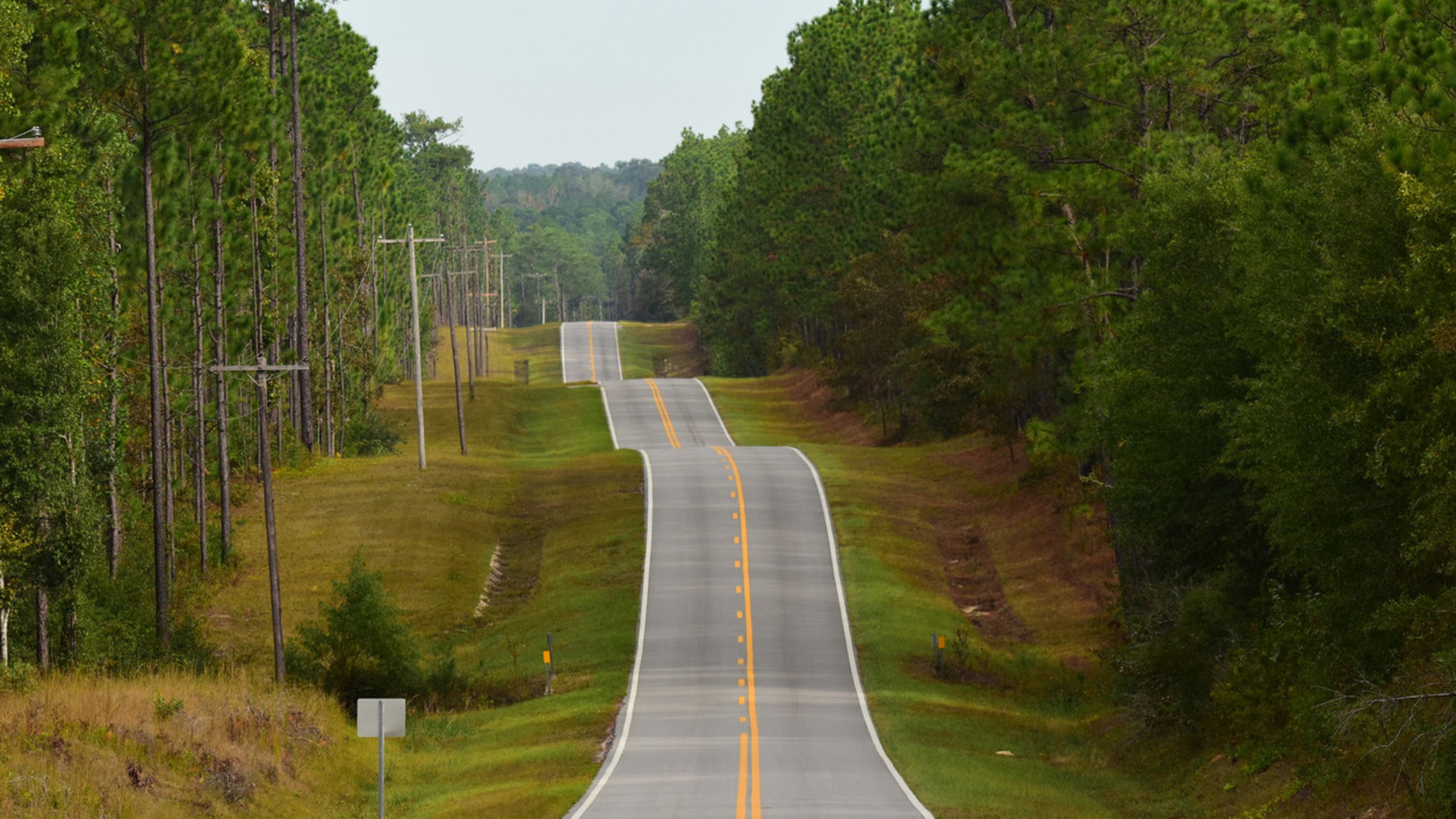
THE GRACE OF ITAWAMBA COUNTY
The Conversion of the Boys
April 27, 2025
The Grace of Itawamba County Fr. Frederick Edlefsen
Mack Bryant was voted “Most Likely to Succeed” by the...Read more
